Ringheart: A Modern Script Font for Small Business Branding
As a small business owner who designs my own labels, social posts, and packaging, I’ve learned that typography isn’t just about “looking nice”—it’s one of the fastest ways to signal professionalism, warmth, and intentionality to customers. That’s why I started using Ringheart: a casual yet refined script font from Script Amp that bridges classic calligraphy with clean, contemporary energy. It doesn’t shout—it invites. And in a crowded digital and retail landscape, that quiet confidence makes all the difference.
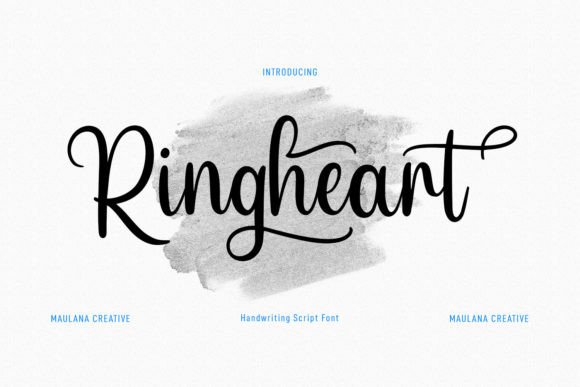
Ringheart feels hand-drawn but never messy. Its strokes have gentle contrast, subtle flourishes, and balanced spacing—so it reads clearly at larger sizes without losing personality. Unlike overly ornate scripts that blur on mobile screens or shrink into illegibility on product stickers, Ringheart holds up beautifully across real-world touchpoints: a café chalkboard menu, a candle jar label, an Instagram story banner, or even a woven tag sewn into handmade apparel. It’s designed to be expressive *and* dependable—not just decorative.
I use Ringheart as my primary display font—meaning it shines in headlines, logos, and hero visuals where brand voice matters most. For example, my local botanical skincare line uses Ringheart for its logo and product names (“Lavender Mist Serum”, “Citrus Clay Mask”), while pairing it with a simple, airy sans serif (like Inter or Poppins) for ingredient lists and website body text. That combination keeps things legible and grounded, while letting Ringheart carry the emotional weight—the softness, care, and artisanal feel customers associate with our brand.
It works especially well for businesses rooted in craft, wellness, hospitality, or personal service. A boutique bakery might use Ringheart for cupcake box tags and seasonal flyers (“Honey Walnut Loaf • Freshly Baked Daily”), while keeping prices and allergen info in a clean, no-nonsense typeface. A life coach could feature Ringheart in her website banner (“You Belong Here”) and email headers—then switch to a warm serif for blog content. Even a small pottery studio uses it subtly on the bottom corner of ceramic packaging tape—just enough to reinforce identity without overwhelming the handmade aesthetic.
Readability is where Ringheart stands out among modern script fonts. Its letterforms open generously, with clear entry and exit strokes—no tangled loops or cramped connections that trip up the eye. On a 2-inch product label, it remains recognizable. In a tiny Instagram sticker (“Thank You!”), it still feels intentional—not rushed or generic. And unlike some handwritten fonts that look uneven when scaled, Ringheart’s rhythm stays consistent whether you’re setting it at 14px for a web footer accent or 120px for a storefront sign.
Before committing to Ringheart across your whole brand, test it in context. Type out your actual business name—not just “The Coffee Co.” but “Bloom & Bean Coffee Roasters”—and see how it flows. Try it over a photo background used in your Instagram feed. Paste it into a mockup of your product label at actual size. Does it hold attention? Does it feel like *you*, not just “a pretty font”? If you’re designing for print, export a PDF and check how ink spreads on uncoated paper—Ringheart’s medium-weight lines handle this well, but always proof with your printer.
Font pairing is simple with Ringheart. Think of it as the lead vocalist—and give it a strong, supportive backing band. A friendly sans serif (like Montserrat, Nunito, or Open Sans) creates instant balance: modern, accessible, and highly readable. For print-heavy brands—think stationery, wedding invites, or apothecary packaging—a low-contrast serif like Lora or Merriweather adds timeless elegance without competing. Avoid pairing Ringheart with other scripts or overly decorative fonts; clarity and contrast are key.
One practical note: Ringheart is a commercial font from Script Amp, so make sure your license covers your intended use. If you’re selling physical products with Ringheart on the packaging—or creating Canva templates, digital planners, or client-branded assets—you’ll need an extended license. Most small business owners start with the standard desktop license (for internal design work and static marketing files), then upgrade as their needs grow. It’s a small step that protects your brand—and respects the designer’s work.
Consistency builds trust. When customers see the same thoughtful, cohesive typography across your website, Instagram bio, receipt stamp, and thank-you card, they subconsciously register your business as intentional and reliable. Ringheart helps you deliver that consistency without sacrificing warmth or individuality. It’s not flashy—but it’s memorable. Not trendy—but quietly current. Not loud—but unmistakably yours.
For handmade soap makers printing batch numbers on kraft labels, for freelance designers building brand kits for clients, for café owners updating their seasonal menu board—Ringheart offers a rare balance: personality with polish, flair with function. It reminds me that great branding doesn’t require complexity. Sometimes, it starts with choosing one font that says exactly what you mean—gently, confidently, and with heart.